


The Mothers Who Drove the Automotive World Forward
In the public imagination, the history of the automobile is often portrayed as a story dominated by grease-stained mechanics and engineers racing to secure patents. Yet the foundations of the global automotive industry were also shaped by female ingenuity, determination and maternal intuition. Many of the most important innovations—from the first road test and key safety improvements to the ergonomics of vehicle interiors—emerged from the unique perspective of women who combined a passion for engineering with the everyday responsibilities of raising children and caring for their families.
Household Challenges That Inspired Global Innovations
Understanding women’s contributions to the development of the automotive industry requires abandoning the myth that groundbreaking inventions are created exclusively in sterile laboratories. In the case of many pioneering women engineers, it was everyday responsibilities associated with motherhood and childcare that directly inspired them to seek new solutions.
The psychological profile of these early mother-inventors was shaped by constant multitasking. Managing a household, ensuring their children’s well-being while travelling, and balancing professional ambitions with family life compelled them to create solutions that were practical, intuitive and reliable. These women did not design machines simply to push technical boundaries; they designed them to protect and support their families.
Motherhood was not a barrier to their creativity. On the contrary, it gave them a unique perspective that allowed them to identify shortcomings in the safety and ergonomics of early vehicles—issues often overlooked by their male counterparts. Sleepless nights spent caring for children blended seamlessly with hours devoted to technical drawings and experimentation in workshops and garages.
Źródło: Science Photo Library
Bertha Benz (1849–1944) – Founding Mother and the First Road Tester
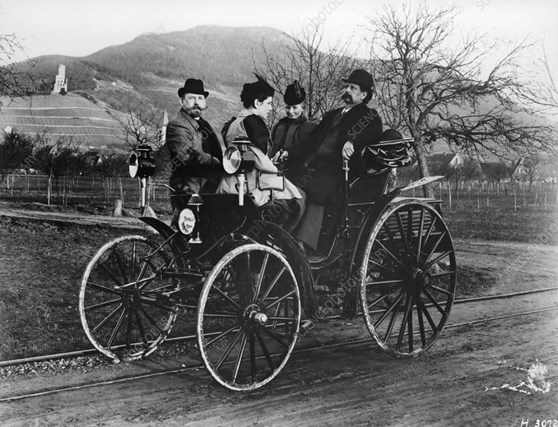
Without Bertha Benz, Mercedes-Benz—and perhaps the entire history of the automobile as we know it—might never have existed. Karl Benz was a brilliant engineer, but he was also deeply uncertain about the commercial potential of his three-wheeled Patent Motorwagen No. 3.
In August 1888, his wife Bertha made a decision that required not only technical courage but also remarkable parental determination. As the mother of five children—Eugen, Richard, Ellen, Thilde and Clara—she understood that her family’s future depended on the success of the invention.
Without her husband’s knowledge and without official permission, she took two of her teenage sons, fifteen-year-old Eugen and thirteen-year-old Richard, and embarked on the world’s first long-distance automobile journey, travelling from Mannheim to her hometown of Pforzheim. Officially, the trip was a visit to their grandmother. In reality, it was an attempt to prove that the automobile could serve as a practical and safe means of transportation for families.
Technical Innovations Born on the Road
The journey, which covered more than 100 kilometres across challenging terrain, became an invaluable testing ground. With her sons by her side, Bertha could not afford mistakes and was forced to solve problems as they arose.
The first filling station in history
When the vehicle ran out of ligroin, a petroleum-based solvent used as fuel, Bertha purchased more from a pharmacy in Wiesloch. That pharmacy is now widely regarded as the world’s first filling station.
Improvised repairs
When the fuel line became blocked, she cleared it using a hatpin. When the ignition wire insulation wore through, she insulated it with her garter.
The invention of brake linings
While descending steep hills, the vehicle’s wooden brakes began to overheat. Concerned for her sons’ safety, Bertha stopped at a local cobbler and asked him to attach leather strips to the braking components. In doing so, she effectively created the first brake linings in automotive history.
The journey provided Karl Benz with invaluable technical feedback. Acting on Bertha’s recommendations, he later added an additional low gear for hill climbing. As a mother, Bertha demonstrated that the technology of the future could be trusted with the lives of one’s own children.
Dorothée Pullinger (1894–1986) – Interior Ergonomics and Social Revolution
Dorothée Pullinger’s story uniquely combines engineering talent with a profound understanding of family needs. Born in France as the eldest of eleven children of Scottish automotive engineer Thomas Pullinger, she assumed significant caregiving responsibilities from a young age, helping raise her younger siblings.
During the First World War, she managed a large munitions factory employing approximately 7,000 women. Her most significant achievements came after the war when she led Galloway Motors and started a family of her own, becoming the mother of a son and a daughter.
Her experiences as both a caregiver and a mother transformed her approach to automotive design.
Źródło: https://www.maharam.com/stories/rawsthorn_dorothee-pullingers-car-for-women
A Car Designed Around Women and Families
Pullinger recognised something revolutionary for her time: automobiles had been designed by men and primarily for men. They were heavy, difficult to operate and often uncomfortable for drivers of smaller stature.
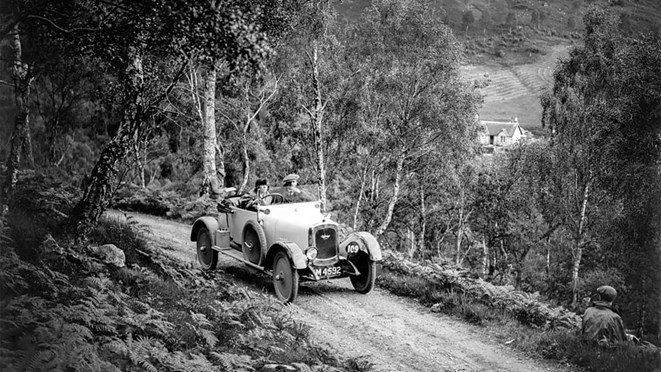
As a mother travelling regularly with children, she developed the Galloway 10.5 HP—a lightweight, reliable vehicle designed with family practicality in mind.
An ergonomic revolution
She raised the driver’s seating position to improve visibility, reduced the steering wheel diameter, moved controls closer to the driver, and relocated both the handbrake and gear lever inside the cabin rather than outside the vehicle.
Practicality
The car featured a reliable electric starter, eliminating the need for physically demanding hand-cranking—a major advantage for women travelling with children.
Supporting Working Mothers
Pullinger’s legacy extends beyond engineering. She also became a pioneer of workplace reform.
Understanding the challenges of combining professional responsibilities with childcare, she introduced a groundbreaking apprenticeship programme for women at her factory in Heathhall. She also established a modern nursery and childcare facilities for employees’ children—an unprecedented initiative within the heavy industry sector of the time.
Helene Rother (1908–1999) – Single Motherhood and the American Dream
Helene Rother’s story represents one of the most compelling chapters in automotive history, illustrating how maternal determination became the driving force behind an extraordinary professional career.
Born in Germany, she studied design at the Bauhaus before moving to Paris, where she worked in jewellery and fashion design.
Everything changed with the outbreak of the Second World War. Living in Nazi-occupied France, Rother became a single mother. Her primary objective became securing a safe future for her young daughter, Ingeborg.
In 1941, after a dramatic escape through a refugee camp in Casablanca, Helene and her daughter arrived in New York with virtually no possessions beyond her design talent.
From Refugee to General Motors Pioneer
Determined to provide for her daughter, Rother pursued opportunities that had previously been closed to women.
In 1943, she became the first woman to join General Motors’ automotive interior design team in Detroit. There she worked on upholstery, lighting and interior details.
In 1947, she established her own design studio and began collaborating with Nash Motors. She transformed the perception of the automobile interior from a purely functional mechanical space into a stylish, comfortable and welcoming extension of the home.
She introduced luxurious fabrics, coordinated colour schemes and innovative reclining seats that were promoted as ideal for families travelling long distances.
Everything she achieved at the highest levels of American industry stemmed from a promise she made to her daughter during their refugee journey—to build a safe and prosperous future for them both.
A Legacy Written in Love and Practicality
The stories of these three women demonstrate that automotive history is about far more than technical specifications and engine performance. It is a story of human needs, determination and the courage to challenge conventions.
Bertha Benz gave us the confidence to undertake long family journeys. Dorothée Pullinger created more ergonomic vehicles and championed support systems for working mothers. Helene Rother showed that single motherhood during wartime could become a source of strength capable of transforming the design philosophy of the world’s largest automotive companies.
What united all three women was a practical mindset shaped by motherhood. Their concern for their families inspired technical and business innovations that continue to benefit millions of people around the world today.
For historians, journalists and automotive enthusiasts alike, their stories serve as powerful evidence that the foundations of the modern automotive world were built, in part, by the hands of mothers.
Automotive History Returns to Poznań for the 10th Time
We will once again celebrate our shared passion for classic vehicles in a truly unique setting. Retro Motor Show is Poland’s largest event dedicated entirely to the history of motoring, offering visitors the opportunity to experience legendary vehicles up close.
Mark your calendar now—the special 10th anniversary edition will take place on 18–20 September 2026 at the Poznań International Fairgrounds.
Don’t wait too long: tickets at the lowest available price are on sale only until 1 June 2026. Secure your place on this journey into automotive history today.